Introducing Ski:IQ™ Stelvio

Votes:
Every Carv skier has a Ski:IQ™, it’s at the heart of our coaching. A single score that captures your skiing and gives you a benchmark to build from as you improve.
Each year, we endeavour to create the best model possible, however, our changes will update your scores, so we aim to do so responsibly and with the utmost care.
Ski:IQ™ Stelvio keeps the same metrics you know, but owing to the improvement of data labelling, we were able to significantly improve two of our technique models: short turns, and parallel.
From Wasatch to Stelvio
Last season, Ski:IQ™ Wasatch rewarded skill on different turn types and harder terrains. It also showed us where we were still falling short.
We didn't always identify the terrain or the snow correctly. This was often frustrating because the terrain is the first building block for technique analysis and the coaching that follows.
We also heard that pitch - how steep the slope is - was inconsistent between skiers. So we spent a large part of the spring improving the way Carv reads the snow pitch, crowdsourcing the pitch across the entire user base or a given patch of snow to make readings more consistent.
The result? Ski IQ Stelvio™.
Behind the scenes
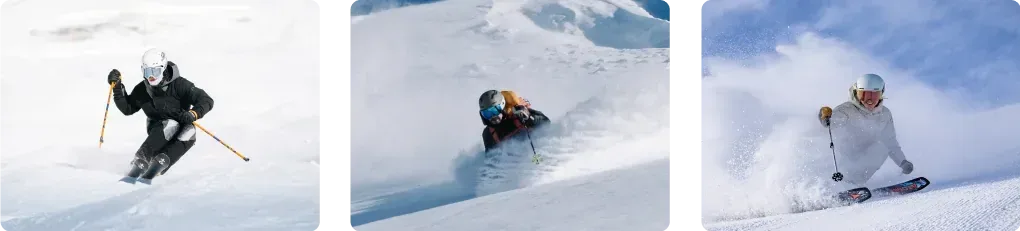
There aren’t many places to test on snow in mid-September, but you can at Stelvio Glacier, a remote ski area in northern Italy, perched on the border with Switzerland. So we packed a tent and headed up to ski the glacier.
The snow was actually surprisingly good, and it’s where we found inspiration for the name of Ski:IQ™ Stelvio, bringing us full circle back to one of the glaciers Carv was first developed on back in 2015.
The headlines
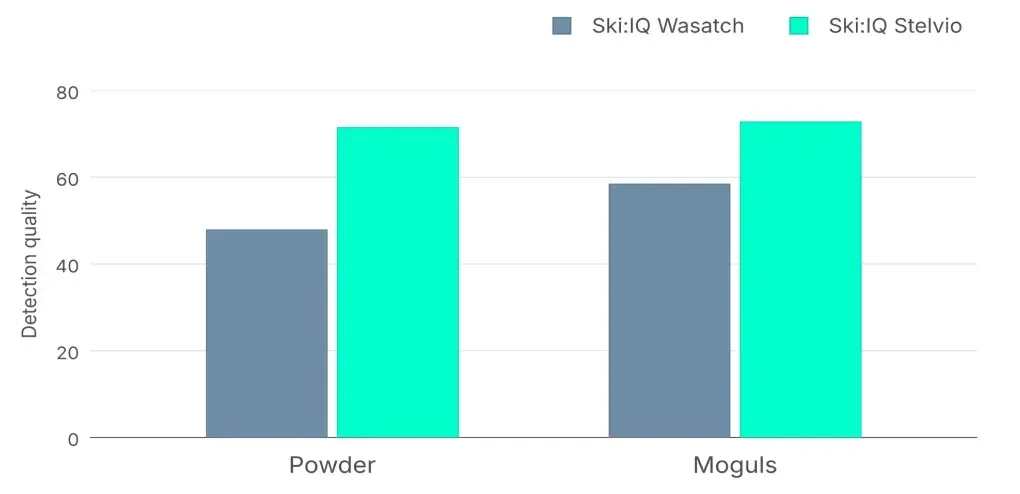
A better understanding of terrain: Carv now detects much more accurately; compared to Ski:IQ™ Wasatch, moguls improved by 1.25x and powder 1.5x
New short-turn and parallel Ski:IQ™ models: Short turns reward control of your skis more than pure g-force. Parallel scores freeride terrain more fairly.
Consistent pitch: Crowdsourced pitch maps make slope readings more consistent between skiers.
Many components unchanged: We are still using the same metrics and carving remains the same
Seeing the terrain better
A signature for every turn
We’ve been building our system to measure carving for 10 years, so it was already reliable. However, moguls and powder were newer to us, and our measurements there were less so.
Until now, our models could only learn from turns we’d labelled, such as runs tagged as moguls or powder, and they only used measurements hand-built by our Data Science team. That was really holding us back, especially when it came to off-piste detection.
Now, Carv passes the raw sensor data from each turn through a neural network to create a turn embedding: a short list of numbers that captures how the turn was skied.
We hid parts of each turn’s sensor data and asked the network to fill in the gaps. In doing so we forced each embedding to capture how the skis were really moving. From this, Carv can now learn from all our data, not just the labelled turns. These turn embeddings pick up the subtle differences between turns, making our terrain detection more accurate than before.
Why we made these changes
More accurate terrain models let us assess your skiing through the right technique lens. Advanced skiers now get fairer scores off-piste: on the same runs, Ski:IQ™ scores in ungroomed snow rise by about 4.5 points on average.
How we trained the model
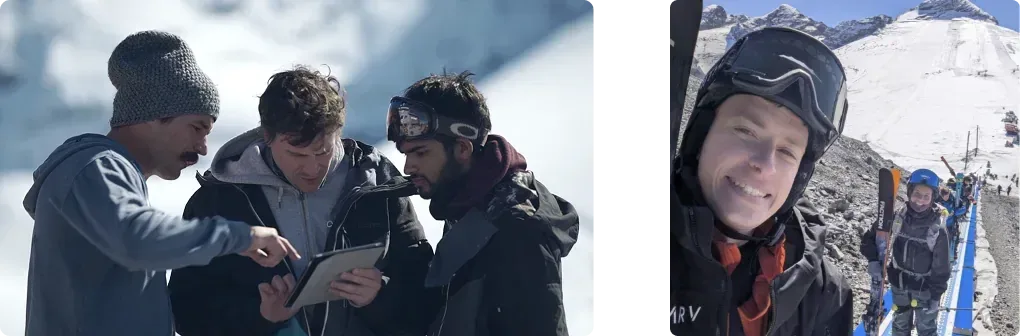
We enlisted over 60 top ski instructors from 12 countries. Together they labelled over 11,000 videos and made almost 85,000 side-by-side comparisons of skiers. Changes only made it into Stelvio Ski:IQ™ if their gain was significant for enough skiers in our audience. Anything that fell short, we left out to minimise IQ disruption.
Crowdsourced pitch: the first piece of Mountain Intelligence
Slope steepness changes how hard it is to ski well, so pitch feeds into your Ski:IQ™. But measuring it from just one skier's sensors is difficult.
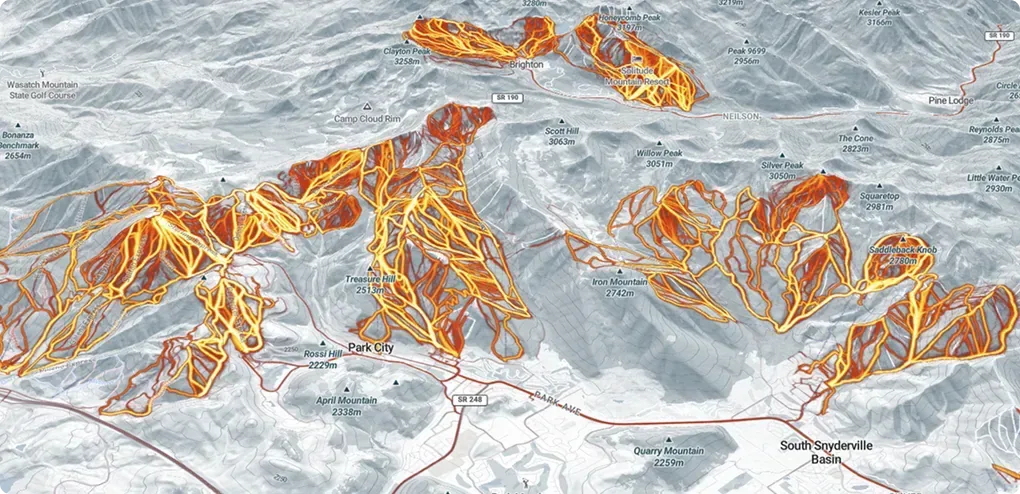
We have built a strong solution by crowdsourcing an aggregated map. With over 60,000 skiers and 1.5 billion turns, we can see the pitch that Carv skiers’ sensors measured over the same patch of snow. The result is a much more robust pitch reading and more consistent scores between skiers on the same run.
We call this Mountain Intelligence: pooling what Carv measures across the mountain to give you a deeper understanding of the terrain around you. Pitch maps are the first piece, and we have many more ideas built on the same concept.
What's next
I have been working on Carv for 7 years. In my first season, the Ski:IQ™ system was nothing like what it is now. Today it is the most accurate technique analysis system in skiing, and probably in any sport.
I'm really excited for the season ahead. Our new skiing signatures give us a new level of understanding, allowing us to assess and coach you more effectively in every part of the mountain and we’re only just beginning to make use of them.
Get Ski:IQ™ Stelvio
Update to Carv app version 10 to see your new scores, then head out and try them on every kind of terrain. Tell us what you think on the website or in the app: your feedback shapes every release.